December 29, 2025 — United States
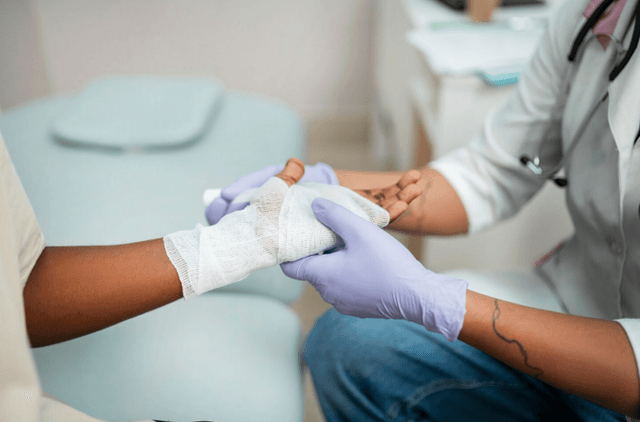
The U.S. Food and Drug Administration (FDA) has granted 510(k) clearance to Theracor™, a next-generation wound care medical device developed by StimLabs® that represents the first human umbilical cord-derived product in sheet form to receive such authorization. This regulatory milestone expands clinician options beyond particulate formats and significantly broadens the applications of human tissue-based solutions for acute and chronic wound management in hospitals and outpatient care settings.
The announcement was made by StimLabs on December 29, 2025, highlighting Theracor as the latest innovation in its regenerative medicine portfolio. The clearance follows on the heels of Corplex P® — the first FDA-cleared human umbilical cord-derived wound care device in particulate form — and builds on the company’s decade-long focus on advancing wound care technology.
“This clearance underscores our leadership and offers greater options to clinicians and patients who benefit from human tissue-based solutions for the management of acute and chronic wounds,” said John Daniel, Founder and CEO of StimLabs. “By expanding our product portfolio, we empower clinicians with choice and strengthen our commitment to innovating around unmet clinical needs while meeting the highest standards.”
Theracor is a sheet-format medical device derived from human umbilical cord extracellular matrix (ECM). Unlike particulate products, which consist of small fragments dispersed across wounds, the sheet form provides continuous coverage, making it suitable for wounds requiring broad surface application and protection. The device is engineered to create and maintain a moist wound environment, a cornerstone of effective healing biology.
According to StimLabs, Theracor is indicated for the same clinical uses as Corplex P®, including:
• Partial- and full-thickness wounds
• Pressure ulcers and venous ulcers
• Diabetic and chronic vascular ulcers
• Tunneled and undermined wounds
• Surgical wounds (e.g., donor sites, graft donor areas, post-Mohs surgery)
• Trauma wounds (abrasions, lacerations, burns, and skin tears)
• Draining and complex wounds
The humankind-derived ECM supports cellular migration and tissue remodeling, which are critical processes in wound healing, particularly in challenging contexts such as chronic ulcers and surgical incisions.
The introduction of Theracor adds a continuous, sheet-based option to regenerative wound care, complementing particulate allografts and traditional biologic matrices. For wound care teams, the sheet format may simplify application, especially in wounds with broad or irregular surfaces where uniform coverage is vital.
Compared with traditional dressings and some synthetic matrices, human tissue-derived products like Theracor bring intrinsic biological cues that can support natural healing processes. This may be particularly relevant in diabetic foot ulcers, pressure injuries, and vascular supply-compromised wounds conditions where standard care often fails and re-hospitalization rates remain high.
Hospitals and wound care centers will likely consider Theracor as part of advanced therapeutic wound management protocols. Supply-chain leaders and formulary committees typically evaluate new 510(k)-cleared devices not only on clinical benefit but also on cost-effectiveness, handling protocols, clinician training requirements, and reimbursement pathways.
Because Theracor is intended for inpatient and outpatient use — including surgical wound management — facilities must anticipate inventory adjustments, staff education, and integration into clinical pathways. The device’s broader indication set means it may be used across multiple departments, from surgical units to chronic wound clinics.
The clearance of Theracor reflects a broader trend within regenerative medicine and advanced wound care toward biologically derived solutions that harness human tissue components. Human umbilical cord ECM has emerged as a promising material due to its composition rich in structural proteins, growth factors, and signaling molecules that aid in tissue repair.