FDA Clears Emboline Emboliner for Embolic Protection During TAVR
Emboline, Inc. announced on September 9 that the U.S. Food and Drug Administration has granted 510(k) clearance for the Emboliner Embolic Protection System for use during transcatheter heart procedures. The cleared indication is to capture and remove embolic material during transcatheter aortic valve replacement (TAVR). The Santa Cruz, California company said it intends to begin a U.S. commercial launch by the end of 2026.
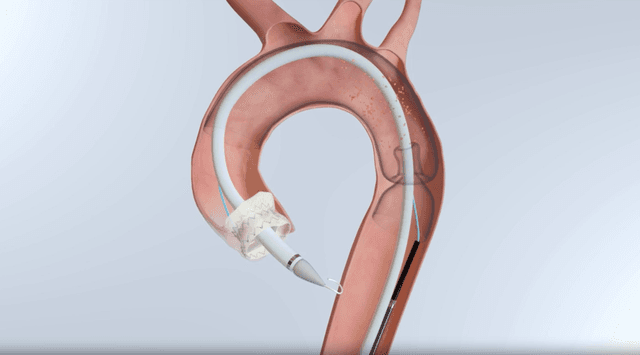
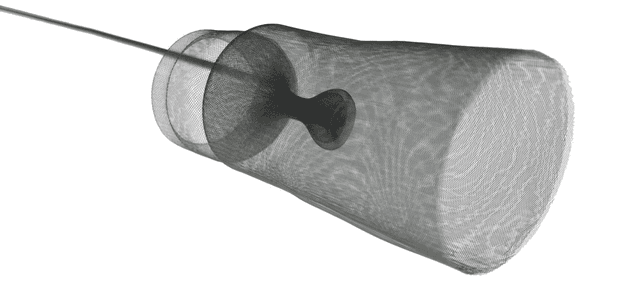
TAVR already depends on a tight bundle of implants and accessories: the valve, delivery system, sheaths, pacing leads, closure devices, and—when a lab uses them—embolic protection filters. Stroke and other embolic injury have been part of the TAVR conversation since the procedure moved from extreme-risk patients into broader use. Debris can travel to the brain, kidneys, and other organs. Existing protection devices typically cover selected cerebral vessels. Emboliner is designed as a circumferential dual-layer filter that lines the aortic arch, covers cerebral and systemic paths, and still allows the TAVR delivery system to pass through a central working lumen.
FDA clearance rests on the PROTECT H2H investigational device exemption study, a prospective, multicenter, randomized comparison with Boston Scientific’s SENTINEL Cerebral Protection System. Emboline said the trial met primary safety and clinical performance objectives, captured significantly more clinically relevant debris than the control device, and recorded the highest technical success reported for a TAVR embolic protection device in a pivotal study. Cardiovascular Business, writing on September 10, said more than 500 TAVR patients with a mean age of 79 were enrolled in the United States, Germany, and Brazil. Patients with a stroke in the prior six months were excluded. On a composite of all-cause death, stroke, or kidney failure within 30 days, Emboliner was reported as noninferior to SENTINEL.
That combination—noninferior hard outcomes plus higher debris capture—will drive the hospital debate. Value-analysis committees will ask whether more captured debris translates into fewer clinical events in everyday TAVR, or whether the benefit is theoretical once operators who already know SENTINEL begin using a new filter. Labs will also ask about setup time, arch anatomy that does not seal, bleeding and access-site complications, and whether the working lumen slows or complicates valve delivery.
The supply-chain impact is immediate even if clinical conversion is slow. Embolic protection is not a commodity glove. It is a high-dollar, procedure-linked disposable that must be on the shelf the morning of a TAVR. Introducing a second cleared system means dual inventory, new in-service calendars, and a risk of expired filters if trial volume is thin. It also means sterile processing and industry reps must learn a different prep sequence. Structural-heart coordinators will want a defined evaluation window rather than an open-ended dual par.
The clearance also arrives in the same news week as broader TAVR-market movement, including reporting that Medicare coverage for TAVR is expanding toward asymptomatic severe aortic stenosis. More eligible patients can mean more valves—and more filters—if programs choose protection as default. Filter utilization has never been universal. A device that claims full-arch and systemic coverage may push some programs that skipped partial cerebral protection to stock a filter for the first time. Other programs will keep SENTINEL and add Emboliner only for anatomy or debris-risk cases.
Scott Russell, Emboline’s president and CEO, said the company built Emboliner to address unmet needs in current protection approaches. For hospital buyers, “unmet need” has to be translated into SKU strategy: one filter family versus two, consignment versus purchase, and how quickly a vendor can replace a size that does not fit. Launch timing “later this year” is late enough that 2026 budget owners should assume some volume this calendar year and a steeper curve in 2027.