WASHINGTON, April 20, 2026 — The U.S. Food and Drug Administration has classified Stryker’s correction involving certain patient-fitted temporomandibular joint implants as a Class I recall, the agency’s most serious category, after a reported surgery in which a fixation screw penetrated the cranial vault. The FDA said the affected devices may cause serious injury or death if they continue to be used without the updated instructions, and it reported one serious injury and no deaths associated with the issue as of Dec. 4, 2025.
The action involves certain TMJ unilateral and bilateral implants in Stryker’s TMJ Concepts line, a patient-fitted prosthesis system intended for reconstruction of the temporomandibular joint. On its April 15, 2026 update, the FDA listed multiple affected catalog numbers, including unilateral, bilateral, oversized, and all-titanium versions, and said Stryker had issued letters to affected customers recommending updated instructions for use. The agency described the matter as a correction, meaning the response centers on updated use instructions and handling of affected inventory rather than a blanket public directive to explant devices already in patients.
According to the FDA, the correction stems from a discrepancy between the screw-hole position shown on the design specification sheet and the screw-hole position in the actual fossa design. In the case that triggered the field action, Stryker reported that a 6-millimeter screw was placed in bone that was about 2.6 millimeters thick, resulting in penetration of the cranial vault during implantation. The FDA warned that this kind of penetration can lead to dural tissue damage, bleeding, cerebrospinal fluid leak, or meningitis, and may require medical intervention to prevent serious injury.
The public FDA notice lays out a staggered timeline for the company’s communications. Stryker first issued an “Urgent: Medical Device Recall” notification to affected consignees on Sept. 30, 2025. Additional expansion notices were then sent on Dec. 4, 2025, and again on Feb. 25, 2026, to reach more customers. In its public instructions, the FDA told providers to continue monitoring patients who already received the implant according to standard follow-up protocols and to contact Stryker if an affected device remains in inventory and has not yet been implanted.
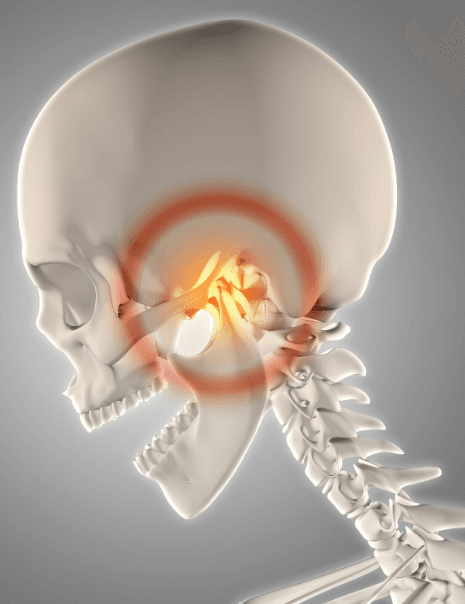
The separate FDA enforcement database adds more detail about the recall’s scope and regulatory status. That database shows the action was initiated by the firm on Oct. 13, 2025, posted on Nov. 14, 2025, and remains open and classified. It lists 63 units in commerce and says distribution reached hospitals or customers in Illinois, Oregon, Mississippi, Texas, Oklahoma, Utah, Massachusetts, Maryland, New York, Pennsylvania, Virginia, Florida, California, Minnesota, and Georgia, as well as sites outside the United States in Canada, Spain, and Brazil. The database identifies the recalling firm as TMJ Solutions Inc. and states the manufacturer reason for recall as a discrepancy in screw-hole position in the patient-fitted implant.
That enforcement record also makes clear what providers are expected to do with any unimplanted product. Consignees were instructed to inform relevant personnel within their organizations, check internal inventory for affected product, segregate and quarantine the devices, discontinue use, and complete the company response form. If stock remains on hand, the notice says a prepaid shipping label will be issued for return, with credit to be issued upon receipt. Those steps are especially important because the implants are not generic stock items for interchangeable use; they are patient-fitted devices tied to specialized reconstructive procedures.
The broader regulatory context helps explain why the FDA treats actions involving TMJ implants so seriously. The agency says all TMJ implants require premarket approval, the FDA’s most stringent type of device marketing application, and that it continues to monitor these devices after approval through adverse-event reporting and other postmarket tools. The FDA also says TMJ implants have been included on the list of tracked devices since 1993 because failure of these implanted products would be reasonably likely to have serious adverse health consequences. In other words, this is a category where regulators expect manufacturers, hospitals, and distributors to be able to identify affected devices and communicate quickly when problems surface.
That context matters for the Stryker case because the FDA has not advised routine removal of implanted products. Instead, the agency’s public guidance focuses on follow-up monitoring for patients who already received the device and immediate control of unused inventory. For surgeons and hospitals, that creates a narrower but still significant operational burden: matching affected devices to pending or planned cases, determining whether any unused patient-matched implants remain on the shelf, and making sure clinicians are working from corrected use instructions before a reconstructive procedure moves forward. Those are practical implications of the FDA’s monitoring and inventory directives.
The case also illustrates how a problem in a relatively small implant category can still create outsized concern inside surgical programs. TMJ reconstruction is a specialized field involving oral and maxillofacial surgeons and complex patients, often with a history of prior procedures, trauma, inflammatory arthritis, ankylosis, or failed grafting. Because the devices are patient-fitted and the FDA has identified the current issue as one that can lead to skull penetration and serious neurological complications, even a limited number of affected units can trigger urgent internal reviews by clinical, procurement, and risk-management teams.
For the market, the significance of the recall lies less in the raw quantity of devices and more in what the event says about oversight of custom surgical implants. The FDA’s actions show that patient-specific design does not eliminate the need for rigorous documentation, accurate design translation, and postmarket vigilance. The open recall status, the multi-step notification timeline, and the instruction to quarantine unused stock all point to a correction that providers are still expected to actively manage.
The immediate message from regulators is measured but clear. Patients who already have the implant should continue to be monitored under standard follow-up protocols, while any affected devices still in inventory should be identified and taken out of use pending contact with Stryker. For hospitals and surgical centers, the Stryker action is a reminder that even highly customized implants can become the subject of broad regulatory action when a design discrepancy creates a serious patient-safety risk.
By Stat Surgical Supply Team.